Bat Friendly Gardens

By Mychal on May 14 2013 | 0 Comments

Bats are a fascinating and diverse group of species, it is important that we protect them and try do our own little bit to help them survive the damage we have caused to their natural habitats. We spoke to Professor John Altringham, a leading bat expert at the University of Leeds to ask him some questions about the current situation with bats and advice on how we can do our own bit to help:

“We should protect bats for no reason other than the fact we should. They are fascinating creatures whose pure intrigue makes them worth protecting and have every right to live without even considering any of the other advantage they provide.”

Bats make up a part of several ecosystems and the knock on consequences of the removal of bats could be disastrous to biodiversity. In addition to this bats even provide economic advantages; a 2011 study gave an estimate of bats contribution to the US economy through pest control of $23 billion a year.

The largest factor effecting bats at the moment are those caused by humans. “Destruction, degradation and fragmentation of their habitat are the main pressures acting on bats. We are constantly chipping away at them, reducing the area and quality of habitat available to them.” As a result of the damage we have caused some species of UK bats are down to only a few % of the population that existed a hundred years ago.

It is often thought that individuals can’t have much of an impact on issues spanning such wide areas however studies have proven that a diverse urban or sub-urban habitat can have great beneficial implications on helping maintain biodiversity and conservation of species. So, how can you do your bit to help?

Make your garden a haven for insects

To help bats you need to provide them with food, by attracting a range of insects to your garden, not only will you help increase the biodiversity of your garden, it will provide a range of potential food for bats.

  •  Use a range of plants including night scented species to attract night flying insects.

Evening Primrose:

Evening Primrose photo Evening20Primrose20Oil_zps31a0d7db.jpg

Image source: http://www.aromaoilstore.com/files/product/small/Evening%20Primrose%20Oil.jpg

Jasmine:

Jasmine photo jasmine_zpscac68769.jpg

Image source: http://www.behindthename.com/imagebank/images/jasmine.jpg

Honeysuckle:

 photo 19d23da9-368e-4fc4-94f2-379f8b27443d_zps1e3dcf8d.jpg

Image source: http://www.flickr.com/photos/lesioc/3602897541/

·         A water feature or pond is also great for encouraging insects to settle in your garden as many insect species require pools of water to lay eggs in. Do not have fish in the pond though, these will eat any insect larvae and defeat the purpose of having the pond.

·         Don’t use pesticides, this may seem obvious but they reduce the available prey for bats and some pesticides can harm bats if they eat insects that are affected by the pesticides.

Keep it dark

Bats are primarily nocturnal, so use light in a sensitive way. Try to keep light levels low and not pointed at areas the bats are likely to use. Obviously you will need a bit of light to be able to enjoy the garden yourself but try to make it a compromise between you and the bats.

Bat boxes

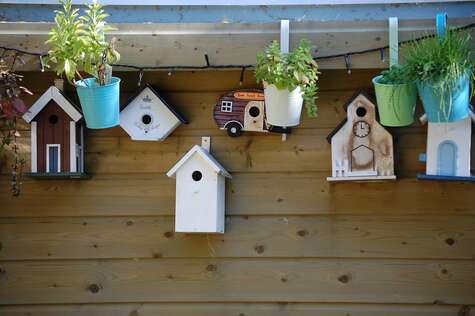
In urban areas bat boxes are very difficult to get to work. The bats have plenty of options for places to roost in the surrounding buildings. If there aren’t a many buildings around to act as roosts then the best option to try is a large multi-chambered bat house that is positioned as high up as possible.

If you incorporate these features to your garden the most likely bats you would attract in urban areas would be the common and soprano pipistrelles. These are the smallest bats found in the UK weighing somewhere between 3.5 to 8.5 grams. Even though they are tiny bats they can eat up to 3,000 insects each in a single night. They fly very erratically close to buildings and trees.

In more fringe urban and suburban areas you may find other bat species like brown long-eared bats, natterer’s bats, noctule and Daubenton’s bats. Potentially others of the 18 resident British bat species could visit your garden but these are the most likely.

So let’s get gardening and doing our part to help with bat conservation. Let us know how your attempts at making a bat friendly garden go!

Sources

http://www.bats.org.uk/index.php

Boyles, J. G. et al. (2011) Economic Importance of Bats in Agriculture, Science, Vol 332, Pages 41-42.                                 


Post info

Killer Slugs Set To Invade Gardens

By SimonH on Feb 05 2013 | 0 Comments


British gardens have had a tough time of it this year with levels of ash dieback reaching epidemic proportions, and things are looking bleak with the emergence of 'killer slugs' in British gardens. According to the Royal Horticultural Society slugs have been the biggest pest problem of 2012, generating almost twice as many enquires to the RHS entomology department as the number two pest, cushion scale.


The 'killer slugs' are actually called Arion vulgaris, or the Spanish Slug, and have devastated crops in regions of Scandinavia. The Spanish Slug has earned the nickname of 'killer slug' as its eating habits include members of its own species, as well as anything else they come across such as dead mice and faeces. 

The 'killer slugs' are brown, reddish brown, or bright orange; this colouration can vary but not within the same population, and can grow up to 5 inches long. They were originally thought to be especially large Arion flagellus, or the Spanish Stealth Slug. It is only recent analysis of the male genitalia, which is distinctively different in Arion vulgaris, that has confirmed them as a new established species within the UK.


The invasiveness of the species is down to several factors, one of the major reasons is Arion vulgaris' willingness to colonise environments that are inhabited by humans.

The slugs are most frequently found in agricultural and horticultural habitats with permanent, dense vegetation; such as grasslands and gardens, they are especially abundant in compost heaps. The synanthropic nature of the 'killer slugs' means the possibility of the slugs being dispersed through trade is especially high. The wide variety of food sources available to the slugs, as they appear to eat most biological material, is another contributing factor to their invasiveness.


The 'killer slugs' are thought to have arrived in the UK via imported goods, possibly salad leaves, and have quickly established themselves in the south-east. One of the main reasons the 'killer slugs' have adapted so well to living in the UK is that they are used to living in dry climates where eggs are more likely to dry out before hatching. Because of this the slugs evolved to lay up to 400 eggs in a single summer, but when the eggs are laid in moist climates more of the offspring are surviving. The eggs are laid around September and November before the adults die off, the eggs begin to hatch in March or April and rapidly grow, maturing in June and July. This means come spring the UK can expect to see an explosion of the 'killer slug' population, with further breeding taking place in summer.

Dr Ian Bedford, head of the John Innes Centre's Entomology facility, found hundreds of the slugs in his own garden and believes the 'killer slugs' are going to be a major problem: "We want to look at the environmental impact because we know that where this slug appeared in northern Europe, other indigenous species disappeared. I haven't seen any other species here since probably May time."


One problem scientists are facing is determining the true extent of the slug's invasiveness. Dr Bedford has urged people to contact him if they find an unusually large number of slugs in their garden along with their location, and preferably postcode. Dr Bedford can be contacted by emailing ian.bedford@jic.ac.uk or by tweeting @drianbedford.


If you do find an unusually large number of slugs in your garden and do want to manage them, after contacting Dr Bedford, using chemical control such as methaldehyde or a carbamate containing bait pellet is one of the best solutions. But it is always good to remember to use the bare minimum of slug pellets as they can be toxic to other wildlife. The nematode Phasmarhabditis hermaphrodita is a popular biological method of controlling slug populations; this has a high effectiveness against juvenile Arion vulgaris but larger members of the population seem to be resistant, so applying the nematodes to your garden as soon as the temperature increases may be a good idea. However the best method of managing the slug population is still going outside at night with a torch and removing the slugs by hand.


This post has been featured on The Huffington Post

For more information about slugs and other pests, visit Woolly Green 


Post info

Christmas Celebrations: Making the Most out of the Festive Season

By Danielle on Dec 03 2012 | 0 Comments

Tis the season to be jolly and there are many ways to do that! Making Christmas crafts indoors is a great way to spend a rainy day on the run up to Christmas. A little nearer the time (if you have the courage) hosting a Christmas children’s party will certainly get you in the Christmas spirit. Fun party activities include; pass the candy stick, Santa says, freeze, a three-legged stocking race and much more. As well as fun, games and house decoration a fantastic idea to make a party unforgettable is to turn the garden shed into Santa’s grotto.

General House Decoration

Firstly, decorate the front porch and entrance to get people in the mood as soon as they arrive at your house. Wreathes can come in many variations, traditional green and red made with green woodland pine and berries is always very effective. Alternatively, a wreath made of pinecones sprayed in gold or silver is an elegant way to decorate your door. Throughout the house, garlands, lights, ribbons, Christmas cards on strings or placed artistically around the house all contribute to a jolly feel.

Garden Decoration

Many may think that the garden is a plain and relatively lifeless place in winter time as much plant life and greenery dies away sometimes leaving the garden a little gloomy. It can, however be turned into a magical place especially for children by the use of simple Christmassy decorations. Typical festive decorations at this time of year include garden Gnomes, outdoor candles, garden decorations and garden lanterns strategically placed. An outside heater is always a major bonus if you happen to have one or know someone kind enough to lend it to you.

Christmas Ambiance

Once the party has got going, music, lighting, food and drink are the vital ingredients to keep the party spirit alive. If children have come accompanied by parents providing refreshments is a must. Mulled wine and mince pies are typical festive snacks. Christmas music could be more catered towards the children’s tastes with lively Christmas songs or there are multiple Christmas carol selections that can be going in the background. Hopefully the outdoor candles and fairy lights will instantly cast a magical feel over the garden.

The Grotto!

The shed need not be cleared out completely. As long as there is a space big enough for a cheerful Santa to sit with a child comfortably on his knee and some space beside him for a sack of token gifts.  Hopefully there will be lots of willing volunteers to don the Santa suit and beard, ho ho ho! Place fairy lights decoratively around the shed door and holly and ivy round the windows. If possible, a specially lit up path to the shed and arrows to ‘Santa’s grotto’ will add to the excitement for the children.  In term of gifts; a trip to a local store will provide lots of scope for gifts, or alternatively Christmas chocolates, toffee apples and candy canes are never a bad idea. Once all this is organised just let the guests provide the entertainment and enjoy the party.

Tidy up

Once everyone has left it is best to clear away straight away so you can sit down and relax properly after. Using disposable cups and plates is very helpful as well as making a game out of a tidying up! The shed also doubles up as an ideal place for garden and Christmas decoration storage once the festive season draws to an end.  Until then, get ready to revel in the Christmas cheer!


Post info

Categories: Crafts , Family , Garden , Christmas , Winter

Ash Dieback: An Introduction

By Danielle on Nov 02 2012 | 1 Comments


As most of us are aware the fungus Chalara fraxinea has been found on British shores. But what is Chalara fraxinea and why is it such a problem? Chalara fraxinea is a fungus that causes ash dieback in ash trees, and it’s particularly violent. It has the potential to devastate the ash tree population, similarly to what happened to Dutch elm trees in the 1970’s. The demise of the ash trees in Britain would be a huge blow to the ecosystem and biodiversity, especially in a time where climate change is high on the agenda.

Chalara fraxinea is a form of fungus that causes leaf loss and crown dieback in infected ash trees, otherwise known as ash dieback. Chalara fraxinea is actually the asexual form of a fungus called Hymenoscyphus psuedoalbidus, and is closely related to the saprotrophic Hymenoscyphus albidus. The fungus being saprotrophic means it feeds on the dead leaves of ash trees by secreting enzymes onto the leaf that then break the leaf down into smaller molecules; by breaking the food into smaller molecules the fungi can then absorb the digested nutrients without the use of internal organs. Because Hymenoscyphus albidus uses dead ash tree leaves for nutrition it is not considered dangerous to the ash tree population, but Chlara fraxinea feeds and grows on live ash trees causing the aforementioned crown dieback.

Many ash trees being sold in Britain have been nurtured abroad, even if the seed comes from Britain. The globalisation of the plant trade is one way the disease is believed to have been spread, another major theory is the spores have been naturally carried on the wind. Chalara fraxinea was first sighted in Poland in 1992, and with the emergence of ash dieback in Britain the majority of Europe now suffers with the problem.

If an ash tree has been infected by Chalara fraxinea the symptoms present themselves as dark patches on the leaves, and then small lens-shaped lesions or necrotic spots appear on the bark and stems. The necrotic lesions then enlarge into cankers causing wilting, dieback of shoots and branches, causing the top of the crown to die.  The wood turns a brownish grey under the bark lesions which usually extends longitudinally past the area of bark necrosis. One of the easiest ways to spot a tree affected by Chalara fraxinea is the lack of branches at the crown of the tree, but retaining them around the middle. Determining whether the dark lesions on the tree’s leaves are a result of Chlara fraxinea can be difficult at this time of year, and one of the only ways to tell if the tree is diseased is using DNA testing rather than natural leaf fall causing the leaves to change colour.  

A study conducted by Lars-GÓ§ran Stener into the ash dieback disease in Sweden indicates that the disease is strongly influenced by the trees genotype. All of the trees in the population exhibited symptoms of ash dieback, but some of the trees exhibited reduced susceptibility to Chalara fraxinea. This resistance was retained over a period of six years under heavy infection pressure, making the idea of breeding ash trees that are resistant to ash dieback a real possibility.

Dr. Robin Sen, an expert in soil microbial ecology and biotechnology at Manchester Metropolitan University, has suggested that “breeding for resistance would be possible, but it will take time as stable resistance will need to be rigorously screened”. This process could take years, and the fungus would also have to be under selection to maintain pathogenicity. By isolating the genes that cause the resistance to the fungi, and genetically modifying clones of the resistant trees, the very next generation of ash trees would have the genetic resistance.

If you do see an ash tree you think may have been affected by Chalara fraxinea don’t do anything hasty; cutting down an infected ash tree would distress the fungi and cause it to release further spores. If you are concerned about an ash tree in your area call the Forestry Commission Plant Health Service on 0131 314 6414

References

Lars-Göran Stener (2012): Clonal differences in susceptibility to the dieback of Fraxinus excelsior in southern Sweden, Scandinavian Journal of Forest Research, DOI:10.1080/02827581.2012.735699 


Author Bio

Simon Howarth is a graduate from Leeds University’s Faculty of Biological Sciences with a keen interest in gardening and naturalism, you can read his post on responsible pest management here http://greenbuildingelements.com/2012/10/05/guest-post-responsible-management-of-garden-pests/.


Post info

Bonfire Night: Celebrate in Style

By Danielle on Oct 29 2012 | 0 Comments

Bonfire night is one of best nights of the year; an excuse for family and friends to gather together, watch pretty firework and eat hearty, warming food. However, if you’re playing host this year, it’s worth taking the extra time to plan your evening accordingly. Depending on the size of your gathering, you need to make sure you plan what’s happening when; whether you’re having food before, during or after the fireworks, how long the bonfire is going to last, and in what order will the evening’s events be taking place. So in order to make sure your party goes off with a bang, here are some handy tips to help you along.

The Fireworks

You want to get the right amount of fireworks; too many and it can get boring or too few can mean the party loses its excitement. Depending on the size of your garden will determine what type of fireworks you have; it’s always better to be too cautious, rather than not cautious enough so if you’re worried a firework will be too big don’t light it. Make sure your guests are at least 12 feet away from the fireworks, even further if there are little ones around. It sounds really obvious but it’s imperative that when handling fireworks, instructions are followed to the letter. It’s a good idea to plan the order of the fireworks so there’s not too much of a gap between explosions. Have some buckets of water prepared nearby just in case they are needed. Have some separate buckets to put sparklers in when they are finished. 

The Food

Depending on how many people are going to your party will depend on how much food you make. But regardless of how many people are attending, it’s best to stick to simple food which is easy to make but really nice and warming. Chilli is a great example; you can do all the preparations during the day and just leave it to warm on the hob or in the slow cooker until the guests arrive. Another popular choice is homemade burgers and relish – this may require a little more attention in the kitchen, but no doubt it will be worth the wait for your guests! The beauty of a burger is that it leaves a hand free for holding a sparkler. For the kids, some sticky toffee apples will put a smile on their faces (make sure they eat the whole apple!) and keep them occupied in between fireworks.

The Bonfire

If you have the space and time to manage a bonfire, then it will be a magical way to round off the evening. Create a fire pit, which should be away from trees and bushes and contain it by building a circle of stones around the pit. Make sure you have plenty of wood to keep the fire burning, and have someone keep their eye on the bonfire at all times to prevent children getting too close. As always with fire, err on the side of caution – don’t make it too big for your garden. As mentioned early, if you don’t feel comfortable managing a bonfire then it’s probably best to avoid it, however if managed correctly it will be a lovely touch to the night. You could always make a guy to throw on top of the bonfire, and remind the children why Bonfire Night has become one of Britain’s most iconic traditions:

Remember, remember the fifth of November

Gunpowder, treason and plot

I see no reason why gunpowder treason

Should ever be forgot!

Post info

Categories: Autumn , Family , Garden , gardening